

The hard part is acting normal
The worst part is not overthinking. The worst part is overthinking and then acting normal as if nothing touched you. A friend says "maybe later," and you nod like it was nothing, while your head starts building three different stories. A partner sends one shorter message than usual, and you keep opening the thread, looking for the part that changed.
The exhausting part is not only overthinking. It is having to hide it. Everyone else sees a calm face, a polite reply, or a normal day. Inside, you are trying to solve a relationship puzzle with too little information and too much emotional weight.
This pattern often belongs to people who notice small shifts quickly. That sensitivity can be a strength. You may catch tension early, remember what matters to people, and sense when someone feels left out. The problem is that the same sensitivity can turn silence into evidence before you have enough facts.
Signal vs. story
Overthinking usually mixes two things: a signal and a story. The signal is observable. They replied later than usual. Their tone was flatter. They cancelled a plan. The story is the meaning your mind attaches to the signal. They are tired of me. I did something wrong. This is the beginning of distance.
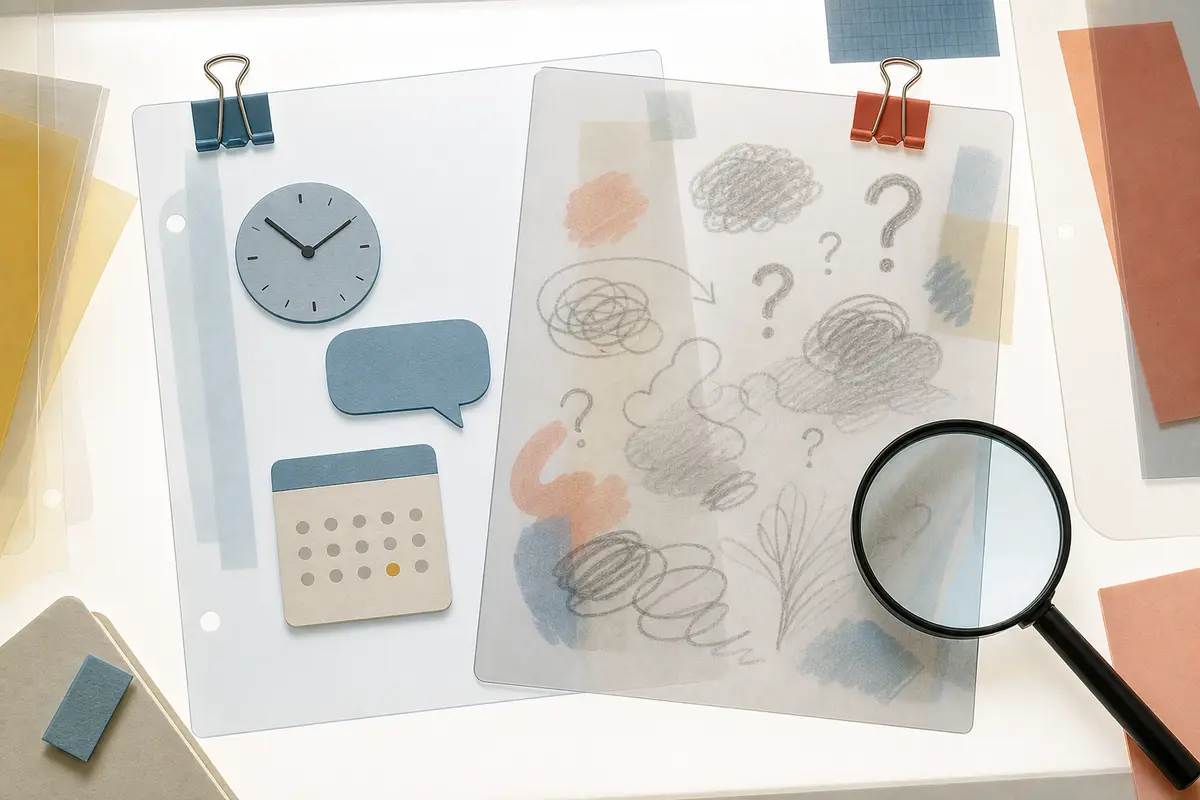
The story might be true, but it is not proven just because it feels urgent. This distinction matters because your body can react to the story as if it were confirmed. You become quiet, guarded, or overly nice before the other person even knows there is a problem.
- Signal: "They replied six hours later than usual."
- Story: "They are losing interest."
- Better question: "Is there a pattern, or is this one data point?"
Why your mind keeps scanning
Your mind scans because uncertainty feels unfinished. If closeness matters to you, a change in tone is not just information; it feels like a possible change in safety. That is why reassurance from yourself often lasts only a few minutes. The mind wants proof, not just a motivational sentence.
There may also be a learned pattern underneath. If you grew up around unpredictable moods, had past relationships where distance arrived without warning, or were often responsible for keeping peace, you may have become skilled at reading the room. A review of rumination research describes repetitive thought as something that can interrupt daily functioning, which matches the lived feeling of replaying one small cue long after the moment has passed.
The goal is not to shame the scanning. The goal is to put it in the right role. Your sensitivity can raise a flag, but it should not be the judge, jury, and sentence. It can tell you to pay attention. It cannot always tell you what the situation means.
When one short message becomes a case file
Imagine someone whose partner usually sends warm goodnight messages. One night the message is short: "Night, tired." They know it could mean exactly that. Still, their mind starts replaying the last conversation, searching for the mistake. They answer kindly, brush their teeth, fold laundry, and look completely normal while checking the thread three more times.
The next morning, everything seems normal. They feel relief, then frustration with themselves for spiraling. But the pattern repeats the next time tone changes. You have already felt disappointed many times. So your mind treats each small shift as a possible warning sign, even when the current person has not earned that level of suspicion.
Overthinking often begins as self-protection. It becomes painful when every small unknown is treated like a confirmed loss.
This is why simple advice like "just stop thinking about it" rarely works. The thought is not the whole issue. The issue is the emotional alarm attached to the thought.
What to do before you ask for reassurance
Before you ask the other person to calm the fear, give yourself a cleaner picture. Write down the observable signal in one sentence. Then write the story your mind is telling. Then write two alternative explanations that do not blame you or idealize them. This does not erase the fear, but it gives the fear a smaller room.
- Ask: "What exactly happened?"
- Ask: "What meaning am I adding?"
- Ask: "Have I seen a pattern, or am I reacting to one moment?"
- Ask: "What would I need to ask directly if this keeps bothering me?"
If the concern remains, use direct but non-accusing language. Try: "I noticed you were quieter today, and I started wondering if something felt off between us. Are we okay?" That is clearer than pretending nothing is wrong while testing the other person through hints.
How partners and friends can help
If you care about someone who overthinks and acts fine, do not mock the sensitivity. It may be the same sensitivity that makes them thoughtful, loyal, and attentive. At the same time, do not accept constant mind-reading as the relationship system. Warmth needs clarity from both sides.
Useful reassurance is specific. "I am tired, not upset with you" is better than "relax." "I will be offline tonight, but I want to talk tomorrow" is better than disappearing and expecting them to know what it means. These sentences are small, but they reduce the space where private stories grow.
If you are the overthinker, your work is to ask sooner and cleaner, not to hide until resentment builds. The goal is not to become less sensitive. The goal is to stop making your sensitivity do every job alone.
Practice a cleaner signal check
Why you overthink and still act fine is usually a mix of perception, fear, and self-control. You notice something, you feel the possible meaning, and then you try to stay easy to be around. That can look calm from outside while feeling heavy inside.
This week, practice separating signal from story before you react. If the pattern is real, you can address it with clearer words. If it is not real, you can save yourself from treating every silence like an emergency. Either way, you deserve more than a calm face over a racing mind. If your overthinking mainly appears before you make a move, read why liking someone can make you freeze. For a broader read on whether this is part of your personality pattern, try the Traitiva assessment when you are not already activated.


